How to Avoid Greenwashing Risks: A Technical Guide to Eco-Authenticity
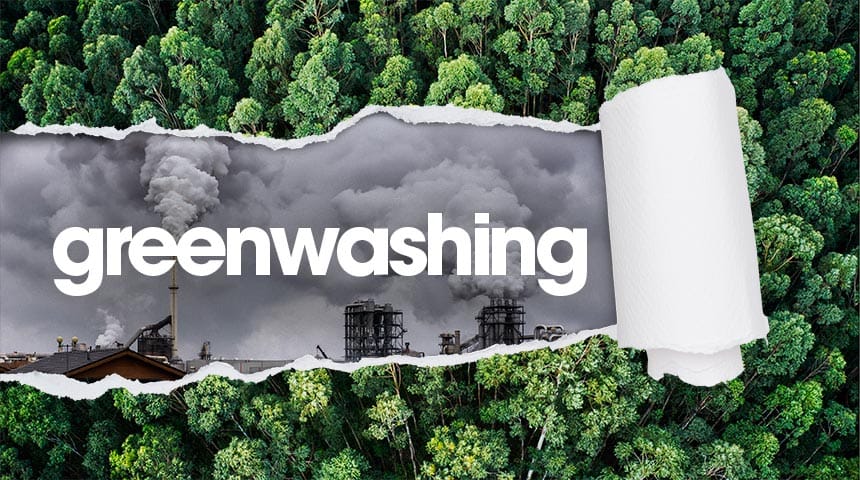
The modern marketplace is saturated with ecological promises, yet as the climate crisis intensifies, the gap between corporate rhetoric and systemic impact has become a significant liability. Greenwashing, the deceptive practice of making unsubstantiated or misleading claims about the environmental benefits of a product, service, or company, has evolved from simple marketing exaggeration into a sophisticated regulatory and reputational minefield. For the conscientious traveler, investor, or consumer, the challenge is no longer just identifying “green” options, but vetting the structural reality behind those labels.
This phenomenon is not merely a matter of bad faith; it is often a byproduct of “organizational decoupling,” where marketing departments move faster than operational capabilities. As global ESG (Environmental, Social, and Governance) standards tighten, the legal consequences of misrepresentation are escalating. For businesses, a single debunked claim can trigger a cascade of litigation, loss of institutional trust, and de-listing from sustainability indices. For the audience, the noise of “eco-friendly” buzzwords has created a paradox of choice that often leads to skepticism rather than engagement.
To navigate this landscape, one must adopt a forensic approach to environmental claims. Authenticity in sustainability is rarely found in the aesthetics of a brand, the earth tones, the leaf logos, or the pastoral imagery, but in the granular data of its supply chain, its carbon accounting protocols, and its adherence to third-party scientific verification. This pillar article provides the analytical framework necessary to deconstruct ecological narratives and provides a definitive roadmap for those seeking to insulate their decisions from the volatility of deceptive marketing.
Understanding “how to avoid greenwashing risks.”

To effectively avoid greenwashing risks, one must move beyond the “surface-level audit” and investigate the “Intent-Impact Variance.” A common misunderstanding is that greenwashing is always a deliberate lie. In technical reality, it often takes the form of “Hidden Trade-offs” where a company highlights a minor environmental win (such as removing plastic straws) while ignoring a massive environmental deficit (such as an unaddressed carbon-heavy supply chain). Understanding this risk requires a multi-perspective view that looks at the company’s “Total Metabolic Load” rather than isolated initiatives.
From a regulatory perspective, avoiding these risks involves scrutinizing the “Specificity of Language.” Vague terms like “natural,” “sustainable,” or “eco-conscious” lack legal definitions in many jurisdictions, making them the preferred tools for obfuscation. A high-integrity claim is always “Bounded and Quantified.” It specifies the exact percentage of recycled content, the specific carbon protocol used, and the third-party auditor responsible for the verification. If a claim cannot be falsified or measured, it is not a scientific statement; it is a marketing narrative.
Furthermore, the risk landscape is shifting from “Consumer Protection” to “Securities Fraud.” As institutional investors rely on ESG data to value companies, greenwashing is increasingly being treated as a material misstatement of financial health. For the individual, this means that the tools for avoiding greenwashing are becoming more sophisticated, moving away from anecdotal blog posts and toward integrated sustainability reports that are signed off by Chief Financial Officers and legal counsel. Navigating this requires a shift in mindset: viewing sustainability not as a feeling, but as a rigorous accounting discipline.
Deep Contextual Background: The Evolution of Eco-Deception
The history of greenwashing is intrinsically linked to the rise of environmentalism as a consumer movement. In the 1960s and 70s, eco-deception was crude, often consisting of advertisements that depicted industrial factories nestled in pristine forests to deflect attention from air and water pollution. By the 1990s, as the first wave of “Green Consumerism” hit, the focus shifted to labeling. This era saw the birth of the “Vagueness Era,” where products were labeled “environmentally friendly” without any standardized criteria to back them up.
The 2010s saw the rise of “Carbon Neutrality” as the primary theater for greenwashing. This period was characterized by a heavy reliance on unverified carbon offset schemes that promised to plant trees in distant lands to “cancel out” current emissions. Many of these projects failed to provide “Additionality” (meaning the trees would have existed anyway) or “Permanence” (the trees died or were cut down shortly after).
In 2026, we have entered the “Regulatory Crackdown Phase.” Governments in the EU, the US, and Australasia have introduced strict “Green Claims” directives. These laws require that any environmental claim be backed by a Life Cycle Assessment (LCA) and be easily accessible via QR codes or public databases. The historical trend is clear: we are moving from a “Wild West” of voluntary disclosures to a standardized regime of mandatory, audit-ready biological and chemical reporting.
Conceptual Frameworks and Mental Models
To deconstruct environmental narratives, we utilize three primary frameworks:
1. The Seven Sins of Greenwashing (The TerraChoice Model)
This classic framework identifies the core tactics of deception: the Sin of the Hidden Trade-off, the Sin of No Proof, the Sin of Vagueness, the Sin of Irrelevance (claiming “CFC-Free” when CFCs are already illegal), the Sin of the Lesser of Two Evils, the Sin of Fibbing, and the Sin of Worshiping False Labels.
2. The Additionality Constraint
This is a critical mental model for carbon claims. It asks: “Would this positive environmental outcome have happened without this specific intervention?” If a lodge claims to protect a forest that is already a national park, they are failing the additionality test. High-integrity stays, and products must prove they are creating new value.
3. The Scope 1, 2, and 3 Transparency Wall
This framework, derived from the GHG Protocol, differentiates between direct emissions (Scope 1), purchased energy (Scope 2), and the entire supply chain (Scope 3). A company that claims to be “carbon neutral” but only accounts for its office lights while ignoring the manufacturing of its products is engaging in “Boundary Manipulation.”
Key Categories and Variations
Greenwashing is not monolithic; it adapts to the specific vulnerabilities of each industry sector.
Comparison of Deceptive Patterns
| Category | Tactical Focus | Primary Risk | High-Integrity Alternative |
| Visual Greenwashing | Pastoral imagery / Green logos | Subliminal bias toward safety | Data-first, minimal aesthetics |
| Offset Dependency | Buying “credits” for guilt | No actual emission reduction | Direct decarbonization of assets |
| The Halo Effect | One “green” line in a dirty brand | Brand-wide misrepresentation | Institutional B-Corp certification |
| Vague Adjectives | “Natural,” “Pure,” “Clean” | Legal and regulatory fines | Technical, metric-based descriptors |
| Historical Delay | “Net Zero by 2050” targets | Lack of immediate accountability | Near-term (2028-2030) milestones |
| The Certification Trap | Using self-made “stamps.” | Conflict of interest | ISO or third-party verified logos |
Decision Logic for Verification
When encountering a claim, the evaluator should apply a “Reverse Burden of Proof.” Instead of asking “Why should I doubt this?”, one should ask “Where is the direct link to the raw data?” If the link is more than two clicks away or requires a nondisclosure agreement to view, the risk of greenwashing is high.
Detailed Real-World Scenarios

The “Sustainable” Yacht Charter
-
The Claim: A yacht is advertised as “Eco-Friendly” because it has solar-powered lighting.
-
The Reality: The propulsion system remains a heavy-duty diesel engine consuming 200 liters per hour. The solar panels account for less than 0.5% of total energy consumption.
-
Risk: Functional irrelevance. The claim uses a minor feature to mask a massive environmental footprint.
The Carbon-Neutral Hotel Group
-
The Claim: A global chain claims 100% carbon neutrality through a “Forest Protection” project.
-
The Investigation: Satellite imagery reveals the protected forest was decimated by wildfires two years prior, yet the credits were still being traded.
-
Result: Reputational collapse and a lawsuit from institutional investors for misleading ESG disclosures.
Planning, Cost, and Resource Dynamics
Authentic sustainability is an expensive, long-term operational commitment. Greenwashing is a cheap, short-term marketing expense.
The Financial Delta of Authenticity
| Resource | Greenwashing Approach | Authenticity Approach | Rationale |
| Data Verification | Internal marketing review | Third-party LCA/Audits | External scrutiny costs more but adds “Truth Value.” |
| Supply Chain | Lowest cost, “Green” contract | Direct audit of Tier 2/3 suppliers | Controlling the “Scope 3” tail is labor-intensive. |
| Reporting | Annual PR Glossy | Integrated SASB/GRI Reporting | Regulatory compliance requires technical staff. |
| Marketing Spend | High (Buying the narrative) | Low (The data is the narrative) | Integrity requires quiet competence over loud hype. |
The Opportunity Cost of Deception: While greenwashing may save money in the first year, the “Penalty Cost” (legal fees, brand recovery, and loss of “Cost of Capital” advantages) in the third year usually outweighs the initial savings by a factor of 10:1.
Tools, Strategies, and Support Systems
To insulate an organization or a personal portfolio from these risks, the following “Integrity Stack” is required:
-
Life Cycle Assessment (LCA) Software: Tools that track every molecule from extraction to disposal, providing the “Hard Science” behind a claim.
-
Blockchain Provenance: Utilizing decentralized ledgers to ensure that a “Fair Trade” or “Organic” certificate cannot be forged or double-counted.
-
Science-Based Targets initiative (SBTi): Ensuring that corporate goals are aligned with the 1.5°C Paris Agreement pathway, rather than arbitrary numbers.
-
Satellite Verification Services: Using real-time earth observation to verify that “Reforestation” or “Carbon Capture” projects actually exist.
-
GRI and SASB Frameworks: The “International Accounting Standards” of sustainability, ensuring that data is comparable across companies.
-
The “Precautionary Principle” in Copywriting: A strategy where marketing teams are forbidden from using any adjective that isn’t backed by a specific, cited metric.
-
Whistleblower Hotlines: Internal mechanisms that allow employees to report “Decoupling” between public promises and private operations.
Risk Landscape and Failure Modes
The “Taxonomy of Deceptive Failure” identifies how greenwashing risks compound over time:
-
The Regulatory Trap: A company makes a claim in a region with weak laws, only to be sued in a region with strong laws (like the EU’s “Green Claims Directive”) due to the global nature of the internet.
-
The “Social Media Forensic” Effect: Thousands of unpaid online activists now use satellite data and supply chain scrapers to debunk claims in real-time, leading to viral “Brand Burn.”
-
Institutional De-Risking: Banks and insurers are increasingly pulling coverage from companies with high greenwashing scores, as these companies are viewed as “Unstable Assets.”
Governance, Maintenance, and Long-Term Adaptation
Integrity is not a destination; it is a “Maintenance Protocol.”
The Multi-Tiered Verification Checklist
-
Level 1 (Direct): Do we have the raw receipts for this claim?
-
Level 2 (Comparative): How does this claim compare to the industry baseline? (e.g., Is “10% Recycled” actually good, or is it below average?)
-
Level 3 (Contextual): Does this claim address the most “Material” impact of our business? (e.g., A bank focusing on paper use while ignoring its fossil fuel loans).
-
Level 4 (Eternal): If we stop paying for this initiative today, does the benefit disappear?
Measurement, Tracking, and Evaluation
True authenticity is measured by “Impact Density.”
-
Leading Indicators: Investment in R&D for circular materials; ratio of sustainability staff to marketing staff.
-
Lagging Indicators: Absolute reduction in CO2e (not just “intensity” relative to revenue); third-party audit pass rates.
-
Documentation Examples: Full LCA reports; verified GHG inventory; water-stress maps for all production sites.
Common Misconceptions and Oversimplifications
-
Myth: All large companies greenwash.
Correction: Many large companies have the most rigorous sustainability data because they are under the most regulatory pressure. The highest risk often lies in mid-sized companies that use “Eco” language without the budget for an audit. -
Myth: Certifications are 100% reliable.
Correction: Many certifications are “Pay-to-Play.” One must research the independence of the certifying body. -
Myth: If it’s “Natural,” it’s good for the environment.
Correction: Arsenic is natural. Large-scale cattle ranching is “natural.” Natural does not equal “Low Impact.” -
Myth: “Net Zero” means no emissions.
Correction: It often means “Emissions as usual, but we bought offsets.” The goal should be “Near-Zero” or “Absolute Reduction.” -
Myth: Greenwashing is just a marketing problem.
Correction: It is a structural failure of corporate governance and risk management.
Ethical and Contextual Considerations
The ultimate danger of greenwashing is not just the deception of the individual; it is the “Pollution of the Information Commons.” When consumers cannot distinguish between an authentic regenerative effort and a fraudulent one, they withdraw their support from the market entirely. This “Green Fatigue” slows down the actual transition to a sustainable economy. Ethical leadership requires radical transparency even when the data is “bad.” Admitting that a supply chain is currently 80% dirty but has a verified path to 40% is more valuable than claiming 100% “cleanliness” without proof.
Conclusion
Knowing how to avoid greenwashing risks is becoming the primary survival skill for the modern economic participant. We are transitioning from the “Age of Adjectives” to the “Age of Evidence.” In this new landscape, the most valuable asset a brand can possess is not its image, but its “Auditability.”
The complexity of our global systems means that “100% Sustainable” is an almost impossible goal in 2026. However, “100% Honest” is entirely achievable. The individuals and organizations that flourish will be those that embrace the nuance, admit the trade-offs, and prioritize the cold, hard data of restoration over the warm, soft glow of marketing. Sustainability is a matter of physics and chemistry; it is time we stopped treating it as a matter of public relations.