How to Avoid Eco Certification Fraud Risks: A Masterclass in Integrity
The global economy is currently undergoing a “Green Transition” that is as much about optics as it is about operational reality. As consumer demand for ethical products and sustainable travel matures, the marketplace has been flooded with a dizzying array of stamps, seals, and certificates intended to signal environmental stewardship. However, this proliferation has outpaced regulatory oversight, creating a fertile environment for “Certification Arbitrage.” In this landscape, the distinction between a rigorous, third-party audited standard and a self-issued marketing badge has become perilously thin, leaving both individual consumers and corporate procurement officers vulnerable to systemic deception.
The challenge of verifying environmental claims is no longer limited to spotting obvious falsehoods. It has evolved into a sophisticated game of “Asymmetric Information,” where the entity making the claim possesses deep technical knowledge that the observer cannot easily verify. Whether it is the carbon sequestration rates of a reforestation project or the “greywater” processing capabilities of a luxury eco-lodge, the data is often obscured by proprietary shields or complex scientific modeling. To engage with the sustainable market in 2026 is to enter a theater of “Trust, but Verify,” where the verification process itself is often the most significant point of failure.
This article serves as a structural autopsy of the “Eco-Certification Industry.” We will move beyond the superficial advice of “looking for a logo” and instead examine the mechanical levers of fraud, how standards are diluted, how audits are manipulated, and how the “Chain of Custody” is broken. By treating sustainability data with the same forensic rigor as financial reporting, one can develop a sophisticated framework for discernment. The goal is to move from passive consumption of labels to an active, analytical engagement with the underlying systems of environmental accountability.
Understanding “how to avoid eco certification fraud risks.”
The primary difficulty in determining how to avoid eco certification fraud risks lies in the “Agency Problem.” Most certification bodies operate on a “Member-Pay” model, where the entity being audited is also the entity funding the auditor. This inherent conflict of interest creates a natural pressure toward “Rating Inflation.” To navigate this, one must differentiate between “First-Party” claims (self-reported), “Second-Party” (industry associations), and “Third-Party” (independent, accredited bodies). Fraud risks are rarely about the complete absence of a certificate; they are almost always about the “Standard Dilution” within that certificate’s bylaws.
Oversimplification often leads stakeholders to believe that all “Gold” or “Platinum” ratings are created equal. In reality, a certification may have impressive-sounding criteria that are entirely “Qualitative” rather than “Quantitative.” For instance, a hotel might receive an eco-label for having a “Policy for Water Conservation” without ever being required to prove a reduction in actual liters used per guest. Avoiding risk requires a shift in focus from “Commitments” to “Outputs.” If a certification does not require the public disclosure of raw environmental data, its fraud risk profile increases exponentially.
Furthermore, the risk landscape is complicated by “Geographic Jurisdictional Gaps.” A certification body based in a highly regulated market may lack the boots-on-the-ground infrastructure to verify claims made by a subsidiary in a remote or developing region. This “Audit Leakage” allows companies to maintain a high-integrity brand image in the West while operating with minimal oversight elsewhere. A forensic approach to avoiding fraud involves mapping the distance, both literal and metaphorical, between the certifying office and the point of operational impact.
Deep Contextual Background: The Evolution of Green Signaling
The history of eco-certification can be divided into three distinct epochs. The first was the “Pioneer Phase” (1970s–1990s), characterized by niche, often radical standards like the early “Organic” or “Fair Trade” movements. These were largely grassroots efforts with high barriers to entry and a deep focus on systemic change. The second phase, “The Corporate Integration” (2000s–2015), saw the birth of “ESG” (Environmental, Social, and Governance) metrics. This period marked the professionalization of sustainability, but also the moment where the “Certificate” became a commodity that could be optimized for shareholder value.
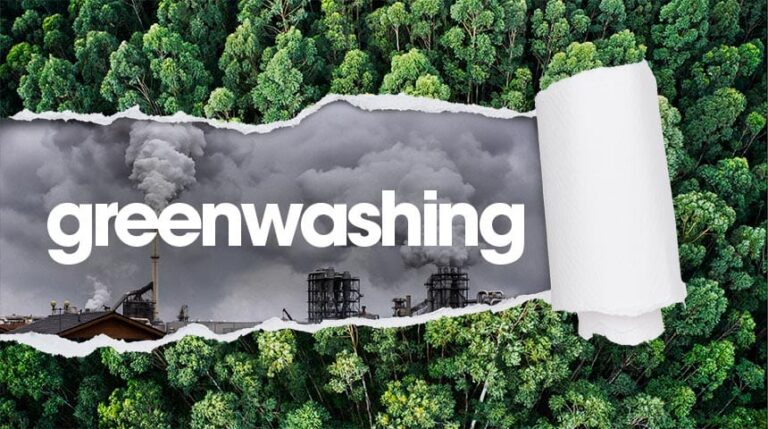
The third and current phase (2016–Present) is the “Age of Greenwashing Complexity.” We are seeing the rise of “Shadow Certifications,” private, for-profit labels that mimic the aesthetics of non-profit standards but offer significantly less rigor. The digital economy has also introduced “Automated Compliance,” where software analyzes a company’s paperwork to grant a seal without a physical inspection ever taking place. This shift from “Observed Reality” to “Documentary Compliance” is the primary driver of modern fraud.
As we stand in 2026, the regulatory environment is finally attempting to catch up. The EU’s “Green Claims Directive” and similar actions by the US Federal Trade Commission are beginning to treat fraudulent eco-claims as a form of consumer fraud. However, the sheer volume of global trade means that the “Forensic Burden” still rests largely on the buyer. The historical lesson is clear: as soon as a metric becomes a target for marketing, it ceases to be a reliable metric for impact.
Conceptual Frameworks and Mental Models
To evaluate the integrity of an eco-label, one should apply the following mental models:
1. The “Chain of Custody” Integrity Model
In any product-based certification (timber, textiles, food), the “Chain of Custody” is the most vulnerable link. This model asks: Is the certificate attached to the company or the specific batch of goods? Fraud often occurs when a company has “Corporate Sustainability” certification but sells products sourced from uncertified, high-impact suppliers. High-integrity models require “Batch-Level Traceability.”
2. The “Materiality Matrix” Lens
Not all environmental impacts are equal. For an airline, carbon emissions are “Material”; for a software company, they are “Secondary.” A common fraud tactic is for a company to highlight a certification in a non-material area (e.g., “Plastic-Free Office”) while ignoring its primary environmental footprint. This framework forces the observer to ask: Does this certificate address the core impact of this industry?
3. The “Standard-Setting vs. Accreditation” Split
It is vital to distinguish between who writes the rules and who enforces them. If the same organization does both, the fraud risk is elevated. The most robust systems involve a “Tier-Three” structure: a Standard Owner (non-profit), an Accredited Auditor (private), and an Oversight Body (government or international coalition).
Key Categories of Certification Failure and Trade-offs
Identifying fraud risks involves recognizing the “Functional Dissonance” between different types of certifications.
The Spectrum of Certification Integrity
| Certification Type | Rigor Level | Primary Fraud Risk | Structural Trade-off |
| Self-Declared (ISO Type II) | Low | “Selective Reporting” hides negative data. | Low cost; zero accountability. |
| Industry-Led (Trade Assoc.) | Moderate | “Protective Benchmarking” sets the bar low. | Scalable for the industry; high bias. |
| Third-Party (ISO Type I) | High | “Audit Capture” auditors are becoming “coaches.” | Expensive; slow to implement. |
| Direct Govt. Regulation | Extreme | “Bureaucratic Lag,” the standard becomes outdated. | High legal weight; lacks innovation. |
| Decentralized (Blockchain) | Variable | “Garbage In, Garbage Out” digitizing a lie. | High transparency; complex to audit. |
The Logic of “Verification Depth”
One must accept the “Complexity Trade-off.” A certification that is easy to understand (e.g., a simple green leaf) is often the most susceptible to fraud because it hides the specific metrics from the user. A certification that provides a 50-page technical audit report is harder to “market,” but offers the only real protection against sophisticated deception.
Detailed Real-World Scenarios
The “Carbon Neutral” Offset Trap
-
The Intent: A major luxury tour operator claims “Carbon Neutrality” based on a forestry certification.
-
The Fraud: The forestry project uses “Avoided Deforestation” credits—essentially being paid not to cut down a forest they were never going to cut down anyway.
-
The Failure: The tour operator continues to use high-emission transport while claiming a “Net Zero” status that has no actual impact on atmospheric CO2 levels.
-
Second-Order Effect: Investment is diverted away from actual decarbonization technologies (electric fleets, sustainable fuels) in favor of cheap, fraudulent credits.
The “Eco-Resort” Water Mirage
-
The Intent: A resort in a water-stressed region displays a prestigious “Eco-Label.”
-
The Fraud: The audit was conducted during the rainy season when water levels were high. The resort hides its use of illegal “Deep Boreholes” that deplete local community aquifers during the dry season.
-
The Failure: The certification body lacks the “Temporal Rigor” to audit the resort across different seasons, allowing the resort to maintain its green status while causing local environmental collapse.
Planning, Cost, and Resource Dynamics
True verification is an expensive, resource-intensive process. If a certification is “free” or “cheap” for a business to obtain, it is almost certainly a marketing tool rather than a sustainability tool.
Resource Requirements for High-Integrity Verification
| Activity | Direct Cost (Internal) | Indirect Cost (Opportunity) | Variance Drivers |
| Full Life-Cycle Analysis (LCA) | $20,000 – $100,000 | Data-gathering labor (Months). | Supply chain complexity. |
| Third-Party On-Site Audit | $5,000 – $15,000 | Operational disruption during site visit. | Geographic remoteness of the site. |
| Annual Re-Certification | $2,000 – $10,000 | Continuous monitoring/reporting. | Number of metrics tracked. |
| Blockchain/Traceability Tech | $10,000+ Setup | Maintenance of digital twin data. | Volume of transactions. |
The “Price of Integrity”: For a consumer or procurement officer, the cost of avoiding fraud is “Research Time.” One must be willing to spend hours or hire experts to peer into the “Back-End” of the certification body’s website. If the “Technical Manual” for the certification is not publicly available, the risk of fraud is nearly 100%.
Tools, Strategies, and Support Systems
To professionally audit a green claim, utilize the following “Validation Stack”:
-
The “Auditor-of-Record” Check: Identify who performed the actual site visit. Research that firm—do they have a history of scandals or “light-touch” auditing?
-
ISEAL Alliance Membership: Check if the certification body is a member of the ISEAL Alliance, which sets global standards for how standards should be set.
-
The “Temporal Audit”: Look for certifications that require annual re-audits rather than once every five years. Sustainability is a state of constant maintenance, not a destination.
-
Satellite Verification Platforms: Use open-source satellite data tools (like Global Forest Watch) to cross-reference claims made by “Carbon Offset” or “Sustainable Timber” projects.
-
The “Whistleblower” Proxy: Search for employee reviews (Glassdoor, etc.) or local NGO reports regarding the company. Operational staff often know where the “Green” corners are being cut.
-
Public Data Dashboards: Favor companies and certifications that provide “Live” or “Real-Time” dashboards of energy and water use. Transparency is the best prophylactic against fraud.
Risk Landscape and Failure Modes
The landscape of eco-certification is rife with “Compounding Risks” where a failure in one area masks a deeper systemic collapse.
-
Audit Saturation: Large consulting firms often “rubber-stamp” certifications to maintain their lucrative relationship with a client. This is a “Systemic Conflict” that mirrors the 2008 financial crisis’s rating agency failures.
-
The “Lobbying Loop”: Large corporations often sit on the boards of the very certification bodies that “police” them, ensuring that the standards never become too “disruptive” to profit margins.
-
Digital Forgery: As certifications move to digital badges, the risk of “QR Code Phishing” or spoofed certificates increases. Always verify the certificate on the certifier’s domain, not the company’s domain.
Governance, Maintenance, and Long-Term Adaptation
For organizations attempting to maintain high-integrity sustainable operations, the “Certification Cycle” must be managed as a core business risk.
The “Continuous Integrity” Checklist
-
Quarterly: Internal “Spot-Audit” of a single environmental metric (e.g., waste diversion rates) to ensure reporting matches reality.
-
Biannually: Review of the Certification Body’s own updates. Standards often evolve; yesterday’s “Gold” might be today’s “Bronze.”
-
Annually: “Stakeholder Perception Audit.” Interview local community leaders or local environmental groups to see if the company’s “Certified” status matches its local reputation.
Measurement, Tracking, and Evaluation
We must move beyond “binary” measurement (Certified vs. Not Certified) to a “Gradated” measurement of integrity.
-
Leading Indicator: “Query Responsiveness.” How quickly and transparently does a company answer a specific, technical question about its certification? A “PR” answer is a red flag.
-
Lagging Indicator: “Standard Drift.” Is the certification becoming easier to get over time? If the number of certified companies is skyrocketing while global environmental health in that sector is declining, the standard has “Drifted.”
-
Documentation Example: A “Multi-Year Impact Report” that shows actual raw numbers (Tons of CO2, Liters of water, kg of waste) rather than just “Percentage Improvement” from an undisclosed baseline.
Common Misconceptions and Ethical Paradoxes
-
Myth: “Plastic-Free” is always better.
Correction: Not if it is replaced with a “Certified Sustainable” paper that has a higher carbon and water footprint. This is “Burden Shifting.” -
Myth: All ISO certifications are environmental.
Correction: ISO 9001 is for quality; ISO 14001 is for environmental management, not necessarily environmental performance. A company can be ISO 14001 certified and still have a massive footprint as long as they are “managing” it. -
Myth: The government has already checked this.
Correction: In most countries, “Green” claims are self-regulated until a major lawsuit occurs. There is no “EPA for Labels.” -
Myth: A “Non-Profit” label is always honest.
Correction: Non-profits are often funded by “Grants” from the very industries they certify. Always follow the money.
Conclusion
The endeavor of determining how to avoid eco certification fraud risks is essentially an exercise in “Intellectual Sovereignty.” It requires us to reject the convenience of the “Icon” in favor of the complexity of the “Data.” In an era where “Nature” has been commodified into a series of marketable credits, the only true defense against deception is a refusal to accept a label at face value.
The future of environmental stewardship lies not in more certificates, but in more radical transparency. The most trustworthy companies of the next decade will be those that don’t just show you a badge, but open their “Books of Impact” for all to see. Until that transparency becomes the global standard, the burden of proof remains with the observer. We must treat every green claim as a hypothesis that requires rigorous, multi-layered testing. Only through this “Forensic Stewardship” can we ensure that our ethical choices actually contribute to the regeneration of the planet rather than the enrichment of the fraudulent.